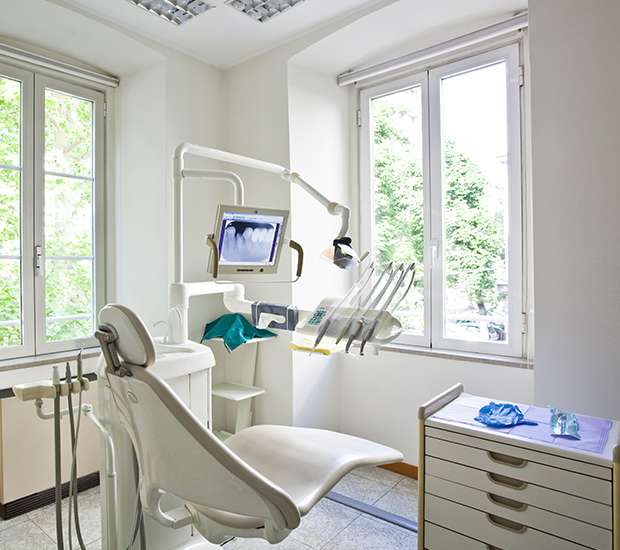

When a dental emergency occurs, whether caused by trauma, an advanced cavity, or a severe abscess, the pain may be excruciating and requires prompt treatment. If a tooth is damaged beyond repair, an emergency tooth extraction may be necessary to remove the source of infection, relieve pain, and safeguard your overall well-being. The extraction is not merely a question of inconvenience. It is a critical step in preventing serious health complications that can arise from untreated oral infections.
We are aware of the need to address acute dental crises. It is essential to receive prompt, effective treatment. Do not lose time if you are in the midst of excruciating, unmanageable dental pain. Contact SoCal Dental Care immediately. Our team specializes in urgent dental care and is prepared to perform emergency extractions when necessary to relieve pain and restore your oral health.
Symptoms Showing You require an Emergency Extraction
It is essential to note that when you have a minor dental issue, it is unlikely to be a primary infection and will not lead to serious health consequences. When you experience tooth pain, knowing whether it can be resolved by a simple filling or a more complex procedure, like a root canal or tooth extraction, will help you determine the type of treatment that will alleviate the pain in the shortest time.
- Differentiating Reversible and Irreversible Pain
The choice between a simple filling and a major operation, like an extraction, depends on the well-being or ill-being of the inner part of the tooth, the pulp. The dentists base their classification on reversible and irreversible pulpitis as the underlying condition. Reversible pulpitis, which may be a result of a shallow cavity or slight structural wear, reveals itself in sharp momentary pain. They disappear immediately when the cold, hot, or sweet stimulus is eliminated. This discomfort resolves quickly, and the pulp is mildly irritated but will heal as soon as the cause is addressed, requiring only a normal filling or simple restoration.
On the other hand, pain that hints at irreversible pulpitis means that the nerve of the tooth has been seriously injured, is dying, or is dead. It is an emergency phase which requires a high level of treatment, either root canal or extraction. You recognize this extreme state, which is characterized by a few unique details:
- The pain is throbbing
- Constant, or
- Comes on without apparent cause
Most importantly, when the pain persists for several minutes after removal of a hot or cold stimulus, or when it spreads to the jaw, neck, or ear, the problem is irreversible, and the tooth cannot be repaired using just a simple filling.
- Systemic Red Flags Requiring Immediate Emergency Care
Although these features of pain determine the urgency of treatment, some red flags indicate that a systemic infection is present and requires urgent, emergency care. An emergency dentist or an emergency room (ER) should be sought immediately if you notice any type of excessive swelling that is spreading very fast in the face, cheek, jaw, or neck, or which is already starting to affect your capacity to swallow or breathe. The presence of a high fever along with tooth pain also indicates the existence of a systemic problem, which suggests that the infection is not localized to the area of the tooth itself. Moreover, pus discharge, which is usually manifested as a chronic and pimple-like swelling on the gum which oozes foul-tasting fluid, is a severe indicator of an abscess that may be treated only by a professional.
- Structural Damage and Trauma
Severe structural damage may render a tooth non-restorable. A tooth that has fractured or split vertically below the gum line will require extraction. It will not be able to repair itself effectively, and bacteria will have considerable penetration into the bone. Likewise, a sudden loss of an adult tooth that is without obvious trauma may indicate significant bone loss due to advanced periodontal disease.
Time is also of the essence in acute trauma, like a tooth being knocked out (avulsed). The tooth should be kept moist, and dental attention should be sought within 30 to 60 minutes to increase the chances of recovery.
Common Issues that Necessitate the Need for Emergency Extractions
Extractions may be required as an emergency measure in cases where the damage or infection has progressed to a stage where a tooth can no longer be effectively treated using conventional procedures, like fillings or root canals. Understanding the underlying pathology can provide insight into why a dentist may opt to extract a tooth to safeguard the rest of the body. These factors are classified into four broad categories, which are the result of decay, trauma, gum disease, and impaction.
- Extensive Decay With an Abscess
The most common factor initiating emergency extraction is untreated dental decay. Bacteria break through the outer protective layers of the tooth. The enamel and the dentin until they get into the inner pulp chamber, where the blood vessels and nerves of the tooth are. As soon as bacteria penetrate the pulp, the infection quickly destroys the tissue, resulting in irreversible pulpitis. This infection progresses to the root and extends further out towards the jawbone, creating a painful pocket of pus referred to as a periapical abscess.
In cases of widespread infection or when the tooth structure is so severely damaged that it cannot sustain a crown after root canal procedures have been performed, the dentist may recommend extracting the tooth to eliminate the source of a potentially severe infection.
- Unrepairable Trauma and Vertical Fractures
Clenching and grinding can result in structural damage, which immediately renders a tooth untenable. Whereas a minor chip or crack can be repaired using bonding or a crown, a vertical root fracture is a serious failure. This kind of fracture commences at the root and causes a complete break of the tooth, resulting in an open cavity through which oral bacteria continuously enter the bone socket. The fracture, being below the gumline and damaging the very foundation of the root, means the tooth cannot be sealed or healed. To avoid a chronic and deep-seated bone infection, the only method is to extract the tooth.
- Advanced Periodontal Disease (Gum Disease)
Periodontitis (or chronic, untreated periodontal gum disease) results in tooth extraction by dissolving the bone structure upon which the tooth is anchored, and not by actually harming the tooth itself. Eventually, the presence of bacteria that cause plaque irritation of the gums results in inflammation and bone loss in the roots. The receding of the bone leaves the tooth without a secure anchor, and it becomes increasingly loose.
At the advanced stage, the tooth is virtually floating in little bone, and the instability, as well as the continuing deep infection, necessitates extraction. Removal of the mobile tooth stops the damaging process, allowing for the maintenance of the remaining jawbone’s integrity.
- Impacted Wisdom Teeth and Pericoronitis
The last causative factor is the presence of affected wisdom teeth, which in most cases do not have enough room to erupt completely. When a wisdom tooth partially breaks through, it forms a small flap of gum tissue that is over the biting surface. This tissue flap easily traps food debris and bacteria, resulting in a local infection known as pericoronitis. This inflammation can be severe, causing pain, swelling, and even making it impossible to open the jaw fully, a condition referred to as trismus or lockjaw. Extraction of the affected or partially erupted wisdom tooth removes the reservoir of bacteria and solves the acid infection.
When to Choose a Root Canal vs. Tooth Extraction
Dentistry prioritizes preserving natural teeth whenever possible. Root canal therapy (RCT) is always the first-line choice when the nerve of the tooth is irreversibly damaged or infected, provided the tooth’s structure is sound. An effective root canal treatment removes the infected pulp, seals the canal system, and prevents the spread of the infection. After RCT, a protective crown will serve to restore the strength and functionality of the tooth that will last for decades in the jaw. This choice acknowledges the fact that a natural tooth has better bite force, keeps the jawbones dense, and offers correct positioning of other teeth.
It is, however, impossible or not very possible to save a tooth when there is a structural failure. Extraction is also required where a fracture of a tooth occurs vertically below the gumline, or the tooth has lost massive bone due to severe periodontal disease. The decay of the tooth is so deep and extensive that there is not enough solid tooth material to hold a protective crown following the root canal procedure. A root canal would be costly, risky, and have a low long-term survival rate. In these cases, extracting the tooth would be the most responsible course of action, as it would remove the infection from this area and help restore oral health.
The cost of an extraction is relatively cheaper than a root canal and crown in the short run. The comparison, however, does not account for the long-term hidden costs of losing teeth. The removal of a tooth leaves a hole. The jawbone in the region becomes weaker over time, and the rest of the teeth shift, resulting in bite problems and potential future dental issues. To avoid these complications, treating the gap left by the lost tooth with a dental implant, the gold standard option, will cost you a much greater sum in total than the original root canal and crown. Thus, the decision prioritizes the biological and functional value of the natural tooth for long-term retention, provided it is structurally viable.
How Dentists Ensure You Feel No Sharp Pain During an Emergency Tooth Extraction
The primary objective in any form of invasive dental surgery is to ensure that the patient experiences no sharp pain. Dentists do this through local anesthesia, which is usually Lidocaine or Articaine, and injected into the nerves around the tooth. This is done to the point that the area is completely numb, and the brain does not receive any pain signals.
Patients need to know the clear difference between pressure and pain during an extraction. You may feel intense pushing, wiggling pressure, but no sharp pain. However, you will not experience the actual sharp, cutting pain of the process. In case, at any moment, you experience a sharp feeling, be sure to report it to the dental professional, who can give you more anesthesia.
To address fear and/or discomfort, some degree of sedation is also possible for patients with extreme dental phobias or those undergoing more complicated extractions:
- Nitrous oxide (laughing gas) — It is the least form of sedation. Nitrous oxide is administered via a small nose mask to produce an euphoric and relaxed feeling. The effects fade within minutes of mask removal, allowing the patient to drive home a few minutes after the procedure is completed.
- Oral conscious sedation — It is a prescription sedative that may include the administration of a pill, generally a benzodiazepine, by the patient approximately an hour before the appointment. The drug causes you to become sleepy, very relaxed, and most times causes you to have restricted memory of the procedure (amnesia). Because this sedation involves the loss of motor skills, you will require a responsible escort to take you and bring you to the appointment.
- Intravenous (IV) sedation — This is the most profound type of conscious sedation, which is given deep into a vein. IV sedation is an intense feeling of relaxation, commonly referred to as twilight sleep, in which you are technically awake but can feel no pain, nor are you aware of what is being done to you. It will need constant supervision by an anesthesiologist or certified professional and is usually only used in the case of surgical extractions of a complex nature, or patients who have severe phobias.
The solution to dental phobia is managing the topmost patient fear, which is the fear of pain. Contemporary anesthesia and sedation methods are very efficient. During the procedure, you will be closely monitored. Keep in mind that you should make your dentist believe that the procedure can be as pain-free and stress-free as possible, and inform them that you feel uncomfortable with something.
The Tools and Techniques Behind Modern Tooth Extraction
A tooth extraction is a highly specialized procedure that requires dentists to use a specific set of tools to achieve a successful outcome.
First are the elevators and luxators. These instruments have thin, sharp working points, and dentists carefully place them between the root of the tooth and the jawbone. They are not used to pull the tooth physically, but instead, they gently cut the small fibres of the periodontal ligament (PDL) that attach the tooth to the bone. At the same time, the act of pressure examines the tooth, using it as leverage to widen the bone socket slightly. This necessary preparation stage loosens the tooth, making it appear much easier to extract and causing less trauma to the surrounding tissue.
After suitable severance of the periodontal ligament and expansion of the socket, the dentist carries out the extraction using forceps. The angles and curves of forceps are crafted to suit the structure of various teeth, allowing a firm hold to be taken on the root, not on the crown, which tends to fracture under pressure. For example, certain types of “Cowhorn” forceps have pointed tips designed to slide along the bifurcation (separating the roots) of the lower molars, providing optimal leverage. The dentist then uses forceps to gently turn and rock the tooth in a controlled procedure, which completes the separation of the tooth from the socket and gently lifts it out.
To extract surgically, for example, impacted wisdom teeth or those with multiple and curved roots, the dentist uses a special type of surgical handpiece, also known as a drill. Unlike standard dental handpieces, the surgical handpiece directs all the cooling air from the back of the device, rather than spraying it directly onto the surgical site. This attribute is vital since there is a risk of air embolism (a rare but possible risk) that is life-threatening and can be caused by the forcing of air into an open wound. This is done with the handpiece, carefully cutting down a tooth into smaller and manageable bits, which enables the dentist to extract the bits one after the other without overpowering the tooth and saving more bone in the process. This excision is especially critical in cases of molars with complex roots or in fractures below the gumline.
The Operation: How it Works (Simple or Surgical)?
Knowledge of the steps involved in the procedure demystifies the extraction process and alleviates fear. Every extraction is initiated with the application of a local anesthetic procedure to guarantee complete numbness, and then a choice of a surgical and straightforward procedure.
- The Preliminary Preparation and Anesthesia
To begin the process of extracting a tooth, the dentist must ensure that the local anesthetic has taken full effect. Then, they proceed to carefully remove the gum tissue around the neck of the tooth using a fine instrument. This is the first stage that prepares the area where the procedure is to be performed, and it is then followed by either a simple or surgical extraction, depending on the state of the tooth.
- Simple Extraction (The Extraction and Removal)
The simplest method of extraction is the quickest one, used when the teeth in the mouth are wholly visible and have straight roots. To initiate expansion of the bone socket of the tooth, the dentist uses an elevator or luxator to cut the minute fibers of the periodontal ligament (PDL). This is done by exerting a long-lasting, intense pressure, but never sudden force, to loosen the tooth from its socket.
When the tooth is found to be mobile enough, the dentist changes to the use of forceps to hold the crown and root firmly. They gently rock and rotate the tooth to dislodge it from the socket and obliterate it. After removal, the dentist cleans the socket, compresses the bone walls (if necessary), and places gauze carefully to ensure that a vital blood clot forms.
- Surgical resection (Incision, Bone Removal, and Sectioning)
However, a surgical extraction is required in cases where the tooth fractures along the gum line, has a complicated root morphology, or is still impacted, for example, a wisdom tooth. According to this procedure, the dentist must initially create a small opening in the gum tissues (a flap) and gently push them back to provide complete exposure of the underlying tooth and bone. They then apply a sterile surgical handpiece to carefully abrade away the small portion of the bone that is in the way of accessing the tooth root.
In the event of a large tooth or a tooth that is severely affected, the crown is cut and/or the roots are divided into two or more smaller parts using the handpiece, a procedure called odontotomy. The severity of trauma is reduced by removing them separately, and the bone structure of the area is not broken up, producing a cleaner result.
- Sound Warning and Post-Extraction Socket Care
Once all the pieces have been removed, the last stage is meticulous socket maintenance. This process involves cleaning of the area, polishing any protruding bone edges, and then closing the flap of the gum with some sutures (stitches) to enable healing. Preparing patients undergoing extraction to experience the peculiar sounds they will encounter during the elevation phase is essential. The loud, disturbing cracking or crunching noises are usually not caused by the fracturing of the jawbone. Instead, these sounds are used to signal the healthy growth of the thick bone socket walls under tension, or the parting of thin tooth roots, and just a certainty that the tooth is coming away as anticipated.
Find an Emergency Tooth Extraction Assistance Near Me
In cases of a dental emergency, particularly one that involves tooth removal, the importance of responding swiftly to avoid complications and worsening of pain cannot be overstated. Delaying treatment not only aggravates the condition but may also cause more complicated procedures in the future.
Do not wait in agony. SoCal Dental Care is here for you. We offer urgent, caring, and skilled emergency services, like emergency tooth extractions, to eliminate the pain and bring you comfort at the earliest opportunity. Do not endure the pain. Call us immediately at 818-821-8308 to schedule an urgent appointment and receive fast relief.