The key to your overall physical well-being is maintaining optimal oral health. However, it can be challenging amid Southern California’s busy lifestyle. Many residents cannot balance proper home hygiene and the professional treatments required, which results in complications that can be prevented, such as tooth decay and gum disease. Failure to observe these dental care practices may lead to painful emergencies and expensive restorative processes that interfere with your day-to-day life.
Luckily, achieving a healthy and colorful smile is possible when you collaborate with a team of committed dentists. At SoCal Dental Care, we seamlessly integrate professional dental care into your busy everyday life. We offer a full range of preventive, restorative, and cosmetic dental services tailored to your individual dental profile. Take the first step toward a lifetime of dental health by contacting us today and scheduling your appointment in North Hollywood.
Essential Daily Dental Care Routines
You may feel that a quick brush before you sleep has your bases covered, but real oral health requires a much more thorough, scientifically based approach. The basics of a healthy mouth lie in the daily oral care program you follow at home. This practice is the initial line of defense against the insatiable bacteria that build plaque, a sticky coating that may harden into tartar within 24 hours unless removed.
Professional visits are essential, but they cannot repair the damage of six months of neglect. You should see your home care as a necessity and not a burden, which keeps your teeth and gums in good structural condition and healthy. To adopt the most appropriate oral health habits, you should know the mechanics of your mouth and how certain tools and methods interact with your biology to prevent infections.
Learning Advanced Brushing and Flossing Methods
How you handle your toothbrush determines whether you are cleaning your teeth or polishing the surface, leaving harmful bacteria behind. You need to embrace advanced brushing techniques to reach the areas where the disease typically starts.
- Mastering the Proper Brushing Angle
The best trick is to hold your toothbrush at a 45-degree angle to your gums. You need to stroke the brush in short, tooth-width back-and-forth strokes. Holding the brush at this angle allows the bristles to reach under the gumline, where bacteria take shelter in the sulcus, the small crevice between your tooth and gum. You should make sure that you brush the outside, inside, and chewing surfaces of the teeth. To clean the inside of the front teeth, hold the brush at a right angle and make several up-and-down movements.
- Considering an Electric Toothbrush
Most dentists will advise a shift to a high-quality electric toothbrush rather than a manual one. Electric toothbrushes offer thousands of strokes per minute, and many have pressure sensors that warn you when you press too hard, which safeguards your enamel against abrasion and your gums against recession. Whichever tool you use, you should brush for at least two minutes twice a day to be sure that you are eliminating enough plaque.
- Preparing for Effective Flossing
However, brushing alone can only clean about 60% of your teeth. The other 40% is between the teeth, which are entirely inaccessible to the toothbrush bristles. At this point, the appropriate flossing method is paramount. It is not possible to just snap the floss in your teeth and pull it out since it does not clean the surface and may hurt your gum tissue. Take a piece of floss, 18 inches long, and wind the greater part of it round each middle finger, leaving an inch or two. Take the floss in your thumbs and index fingers and move it up and down between your teeth.
- Executing the C-Shape Flossing Technique
When flossing the gumline, you should bend the floss into a C shape against the tooth. This C-shape enables the floss to wrap around the tooth and under the gumline, scraping away the biofilm that causes gingivitis. You have to do the same movement on each tooth, using a clean section of floss each time, so you do not transfer bacteria from one part of your mouth to another. With these methods, you are actively preventing interproximal decay and periodontal inflammation.
Optimizing Fluoride and Antibacterial Mouthwash
After you mechanically remove plaque through brushing and flossing, you need to strengthen your teeth and control the oral microbiome chemically. This is done using fluoride and mouthwash strategically. The benefits of fluoride treatment are not limited to childhood; this mineral is crucial for adults, too, as it helps prevent enamel demineralization.
Acids in food and bacteria strip minerals such as calcium and phosphate from your tooth enamel throughout the day, a process known as demineralization. Fluoride acts by pulling these minerals back to the tooth surface, forming a new, harder structure that is more resistant to acid attacks than the original tooth material. You should ensure your toothpaste is fluoride-based, and you may want to use a prescription-strength fluoride rinse or gel recommended by your dentist if you are at high risk of cavities.
Combined with fluoride, antibacterial mouthwash is critical for reducing the amount of bacteria in your mouth. The therapeutic antibacterial mouthwashes include active ingredients such as cetylpyridinium chloride, chlorhexidine, or essential oils that kill bacteria when they come into contact with the mouth, unlike cosmetic rinses, which only mask bad breath and do not kill bacteria.
Therapeutic mouthwash can help eliminate plaque and gingivitis. Swishing the liquid for 30 seconds is recommended so the liquid can reach the crevices between teeth and the gumline that your brush may have missed. However, you should not apply mouthwash right after brushing if your toothpaste contains a higher level of fluoride than the mouthwash, because you risk washing away the concentrated fluoride before it can cement your enamel.
Rather, it is better to use mouthwash later in the day (such as after lunch) to keep the environment clean and prevent halitosis (bad breath), all while maintaining your fluoride levels.
Professional Dental Care Services You Require
Although your home routine is the foundation of oral health, it is limited in its scope. You have deposits on your teeth that cannot be removed through brushing and flossing, and conditions that cannot be diagnosed without advanced imaging and clinical skills. This is the reason why the use of professional dental services is compulsory for long-term health.
The infrastructure, technology, and special knowledge needed to preserve, repair, and improve your smile are available in a local dental clinic. You must also perceive your dentist not as a professional you visit when you are not feeling well, but as a collaborator in your preventive health plan.
Frequent professional intervention will ensure that minor problems are identified before they develop into systemic issues that could jeopardize your overall health.
Preventive Dentistry
Preventive dentistry is the key to professional care. This includes the regular checkups that most patients attend every six months. The main emphasis during such appointments is a professional dental cleaning, or prophylaxis. Despite proper home care, the plaque can mineralize into calculus, also known as tartar.
Tartar is a hard, porous material that adheres to the tooth surface above and below the gumline. Tartar cannot be removed at home; it requires specialized steel tools and ultrasonic scalers operated by a dental hygienist. When left untreated, tartar provides a habitat for bacteria that secrete toxins into your gums, causing irreparable bone loss.
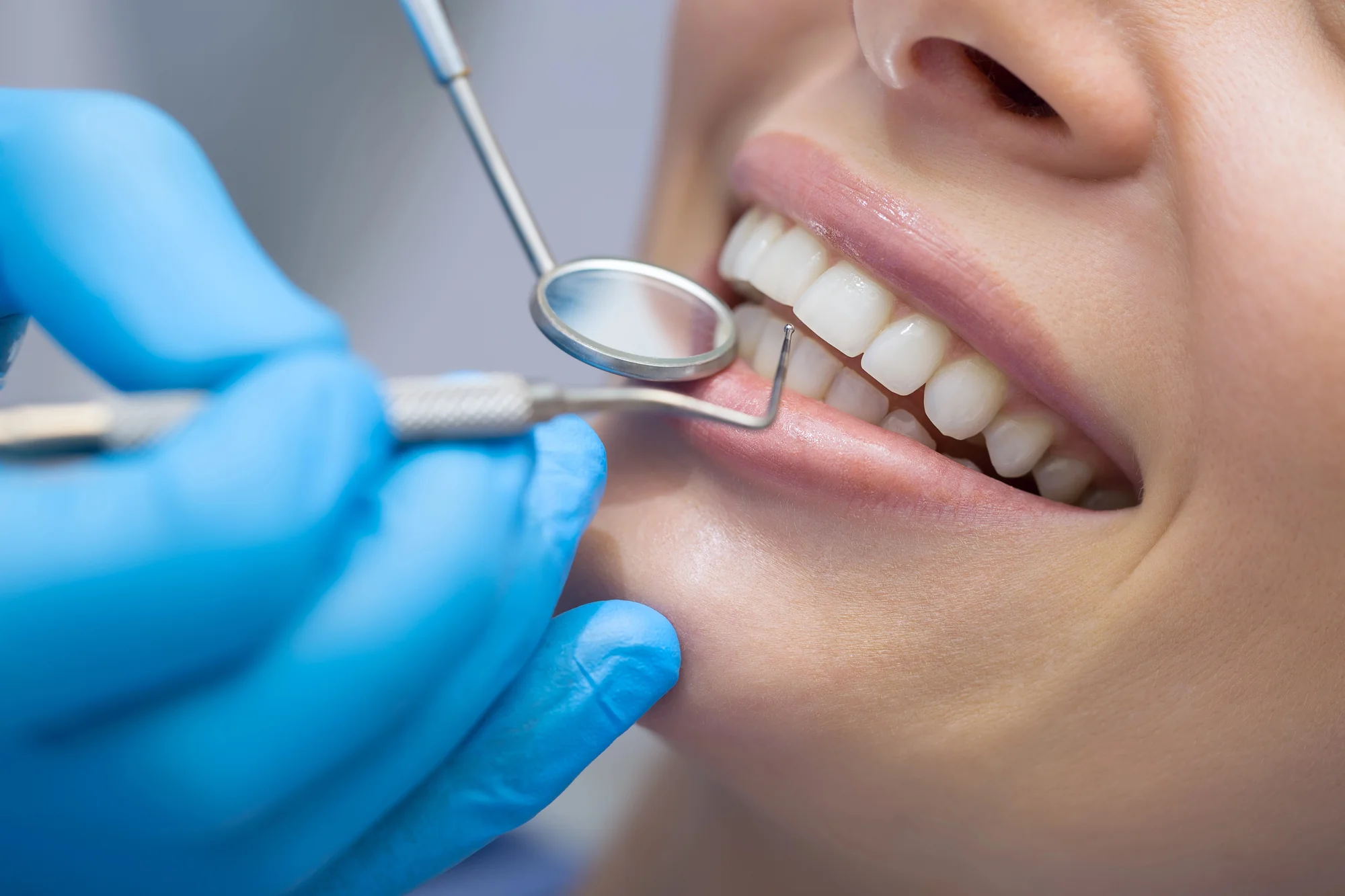
The hygienist will scale your teeth to remove these deposits, polish them to remove surface stains, and smooth the enamel so that new plaque cannot easily adhere between your visits. In addition to cleaning, these visits include thorough oral examinations. Your dentist will visually examine your soft tissues and use digital X-rays to examine the inside of your teeth and the area under the gums. This is because these images demonstrate decay between teeth, root tip infections, and bone loss, which are not visible to the naked eye.
Moreover, the oral cancer screening is done by your dentist every time you have a checkup. They will examine your neck, jaw, tongue, and throat to look for the existence of lumps or irregular tissue alterations. Early oral cancer detection is critical, and regular examination can be a life-saving procedure.
Restorative Dentistry
Even with the best of intentions, teeth may succumb to decay, trauma, or wear. If this occurs, you need restorative dental care to restore the form and function of your dentition. The dental filling is the most widespread type of restoration, which is applied to cure cavities. If you have a cavity, your dentist will remove the decayed portion of the tooth and seal the hole with a composite resin that matches the color of your natural teeth, so the filling is not noticeable.
However, if the decay goes deep into the tooth and infects the pulp (the nerve center of the tooth), then you will need root canal treatment. A root canal is not as painful a procedure as many people assume, but it is a way to relieve pain. It includes removing the infected nerve tissue, cleaning the interior canals, and sealing them to prevent future infection. This is a process that enables you to retain a tooth that would have to be extracted.
When one of your teeth is extracted or lost, you have to think of ways of replacing the missing tooth to avoid the others moving. The gold standard of restorative care is dental implants. An implant is an artificial tooth root of titanium that joins with your jawbone.
After healing, it supports a crown that resembles and functions like a natural tooth. Alternatively, a dental bridge may be used to fill the space left by a lost tooth using the teeth on either side as anchors. Knowing these choices gives you the power to make the right choice regarding fixing your smile and being able to chew and talk with your mouth.
Cosmetic Dentistry
Cosmetic dentistry services enable you to correct the cosmetic flaws that might cause you to feel self-conscious about your looks. Professional teeth whitening is one of the most demanded treatments. Although there are over-the-counter (OTC) strips, they are not as potent and safe as professional systems. In-office whitening involves the use of high-concentration bleaching gels that are triggered by light to dissolve deep-set coffee, wine, and aging stains and can lighten the teeth several shades in a single appointment.
Porcelain veneers are a holistic solution to more structural aesthetic problems. Veneers are shells, made to fit over the front of your teeth, and are made of thin material. They can cover severe discoloration, bridge gaps, and redefine chipped or undersized teeth. This is done with a thin layer of enamel, which is removed to fit the veneer and create a smooth, permanent change.
Another cosmetic solution is dental bonding, in which a tooth-colored resin is placed and cured with a special light to repair chips or cracks. These cosmetic enhancements not only improve your appearance but also motivate you to maintain rigorous oral hygiene to protect your investment, creating a self-perpetuating cycle of health and beauty.
Addressing Dental Emergencies and Warning Signs
Despite a good routine, unexpected situations may arise. The ability to diagnose dental emergencies and know when to visit a dentist immediately can be the key to saving a tooth or losing one. Pain or oral environmental changes should not be overlooked. The mouth is highly vascular and connected to the rest of the body, which suggests the infection can spread rapidly. You must be alert and responsive.
If you experience trauma, such as a knocked-out tooth, visiting the dentist within 30 minutes significantly increases the chances of successful reimplantation. Not every emergency is traumatic; some occur gradually and may present with mild symptoms, which you need to know how to identify.
Recognizing Gum Recession and Bleeding
Normal gums are firm and pink, and they do not bleed. When you brush or floss, and you see blood in the sink, you are seeing one of the leading indicators of bleeding gums. This is not a common occurrence, and you cannot blame it on brushing too hard. The initial symptom of gum disease is gingivitis, the earliest stage, which is typically characterized by bleeding. Failure to do this will cause the inflammation to develop into periodontitis, in which the gums will begin to recede from the teeth.
You should know gum recession symptoms, which are longer-than-normal teeth, gumline sensitivity, or notches that are felt around the root of the tooth. Recession reveals the tooth root, which lacks the protective enamel covering the crown. This renders the root very prone to corrosion and quick erosion.
These symptoms should be addressed by a professional as soon as you observe them. They can be treated with scaling and root planing to clean the periodontal pockets and eliminate the bacterial infection thoroughly. Severe cases may involve gum graft surgery to cover exposed roots. If you do not pay attention to these indicators, you will one day have the bone holding your teeth destroyed and lose your teeth.
Managing Toothaches and Extreme Sensitivity
Pain is a message that your body sends you to tell you that something is wrong. The moment the pain starts, seek severe toothache relief. Constant, aching pains in the tooth usually signify an infection of the tooth nerve or a root abscess. Such an infection will not clear on its own and will require antibiotics and procedures such as a root canal to remove it. Painkillers should not be used to cover the symptom as the underlying pathology deteriorates.
Likewise, you should pay attention to the causes of tooth sensitivity. Although a short shock of ice cream may be typical, experiencing pain after eating hot or cold food may be a sign of a more serious issue. This may indicate a fractured tooth, a loose filling, or a high level of decay that has penetrated the inner dentin of the tooth.
When you bite down and feel sharp pain, you might have a cracked tooth that could split completely unless capped with a crown. Sensitivities can be dealt with early, and more conservative treatments may be provided. The moment you wait until the pain becomes unbearable, you usually only have a choice of more invasive and costly procedures. You should listen to what your teeth are telling you and visit a specialist as soon as you feel any discomfort.
Find a Dental Care Expert Near Me
Maintaining optimal oral hygiene is a lifelong commitment that directly impacts your overall health and confidence. If you implement the robust strategies outlined in this comprehensive dental care guide, you actively protect yourself against severe complications such as tooth decay, gum disease, and unexpected tooth loss.
Taking care of your teeth goes far beyond your daily brushing and flossing routines. It requires a conscious diet and immediate attention to any warning signs your mouth may exhibit. Ultimately, partnering with an experienced dental professional is the most effective way to guarantee your smile remains bright, fully functional, and genuinely healthy for years to come.
Do not wait until minor discomfort turns into a painful, costly dental emergency. Take full control of your oral wellness right now. Please reach out to SoCal Dental Care at 818-821-8308 today to schedule your next professional cleaning in North Hollywood and confidently secure the premium care you deserve.